Project Background & Objectives
To secure power stability for sensitive laboratory equipment and navigate erratic utility services, the National Council for Scientific Research (CNRS) deployed a turnkey 47 kWp roof-mounted, hybrid solar PV system in Jnah, Lebanon. This system optimizes clean daytime generation to insulate the facility from heavy public tariffs and align with sustainable infrastructure modernization.
Operational Challenges & Logistics
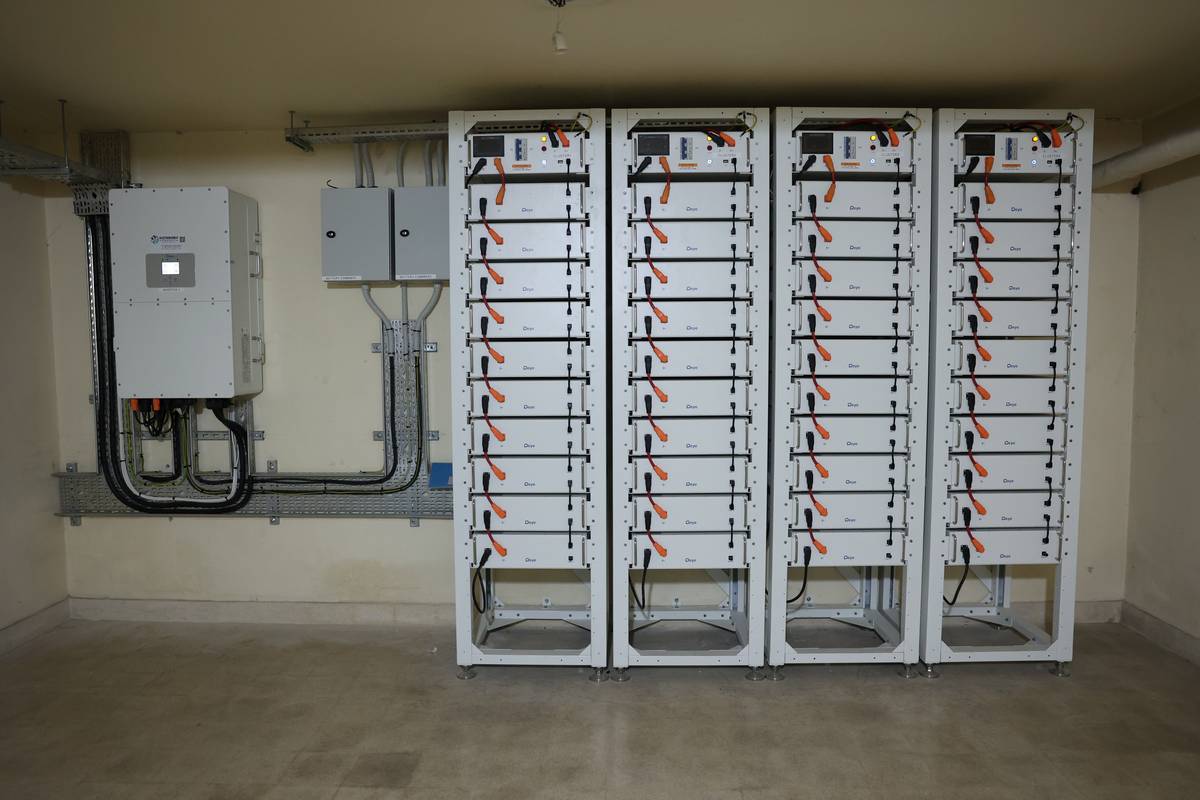
Working on an active government facility introduced logistical constraints. The project required synchronizing a 47 kWp solar array, a 200 kWh battery storage bank, and a 60 kVA backup diesel generator into a cohesive microgrid. Specialized crews managed the installation to preserve rooftop pathways and ensure zero operational downtime.
System Performance & Sustainability Impact
The EPC commissioning delivered immediate grid independence relief. By utilizing the 200 kWh storage and intelligent load sharing, CNRS minimized daily utility draw and fossil fuel reliance, achieving an environmental offset of 81 tons of carbon emission savings annually.